
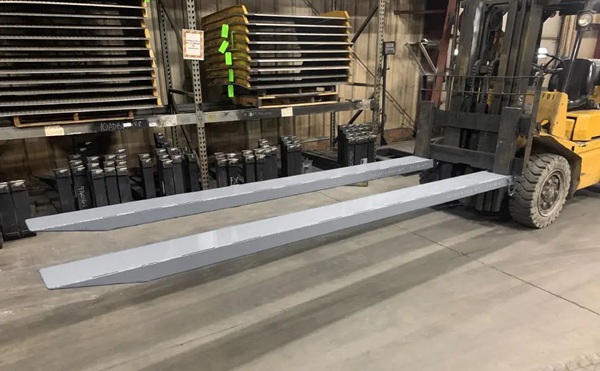
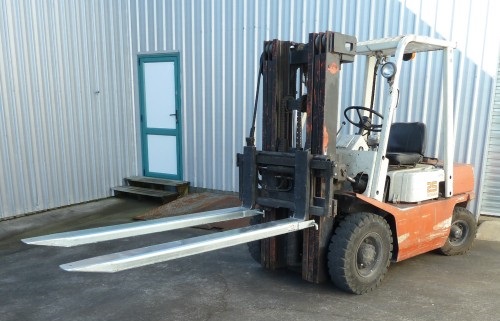
The most common attachment fitted to a forklift is a set of fork extensions or often referred to as slippers. They’re typically used when a load is longer than the standard fork tynes and seems like a quick, simple fix to get the job done.
And yes—quick? Absolutely. Easy? Not quite.
Like any attachment fitted to a forklift, fork extensions can significantly affect the machine’s performance and, more importantly, its safe lifting capacity. Before slipping them on and getting to work, there are several critical factors that must be considered.
Load Size and Fork Length
As a general rule of thumb, the fork tynes (or extensions) should extend to the full length of the load being lifted. If the load is not properly supported, it can become unstable, increasing the risk of tipping, load damage, or serious injury.
Using extensions that are too short for the load is just as dangerous as overloading the forklift.
Reduced Lifting Capacity
This is where many operators get caught out.
A forklift will lift less weight as the load centre increases. Fork extensions move the load further away from the mast, which reduces the forklift’s effective capacity, sometimes dramatically.
Because of this, it’s strongly recommended that you consult the forklift manufacturer or a qualified engineer to have the machine re-rated. This ensures you know exactly how much weight the forklift can safely lift when operating with an increased load centre.
Guessing is not good enough.
Rating Plate and Legal Compliance
This is not optional, it’s the law.
While the original rating plate shows what the forklift could lift in its standard configuration, it has no legal relevance once an attachment is fitted.
Under Australian legislation, when an attachment such as fork extensions is used, the forklift must be re-rated, and the actual lifting capacity with the attachment fitted must be displayed on an updated data compliance plate.
- No plate.
- No rating.
- No legal operation.
Operator Training
This is one of the most commonly overlooked, and most important steps.
Any time a forklift is modified or an attachment is added, operators must be trained in how the change affects the machine. The forklift will handle differently, lift differently, and have different limitations.
If you’re the only operator, make sure you understand those changes fully. If you employ others, take the time to train them properly and keep records of that training for compliance and safety purposes.
The Washup
Fork extensions are a useful tool—but only when used correctly. Taking shortcuts with attachments can lead to damaged equipment, serious injuries, or costly legal issues.
When it comes to forklifts:
If it’s quick, double-check it. If it’s easy, make sure it’s legal.

Leave a Reply